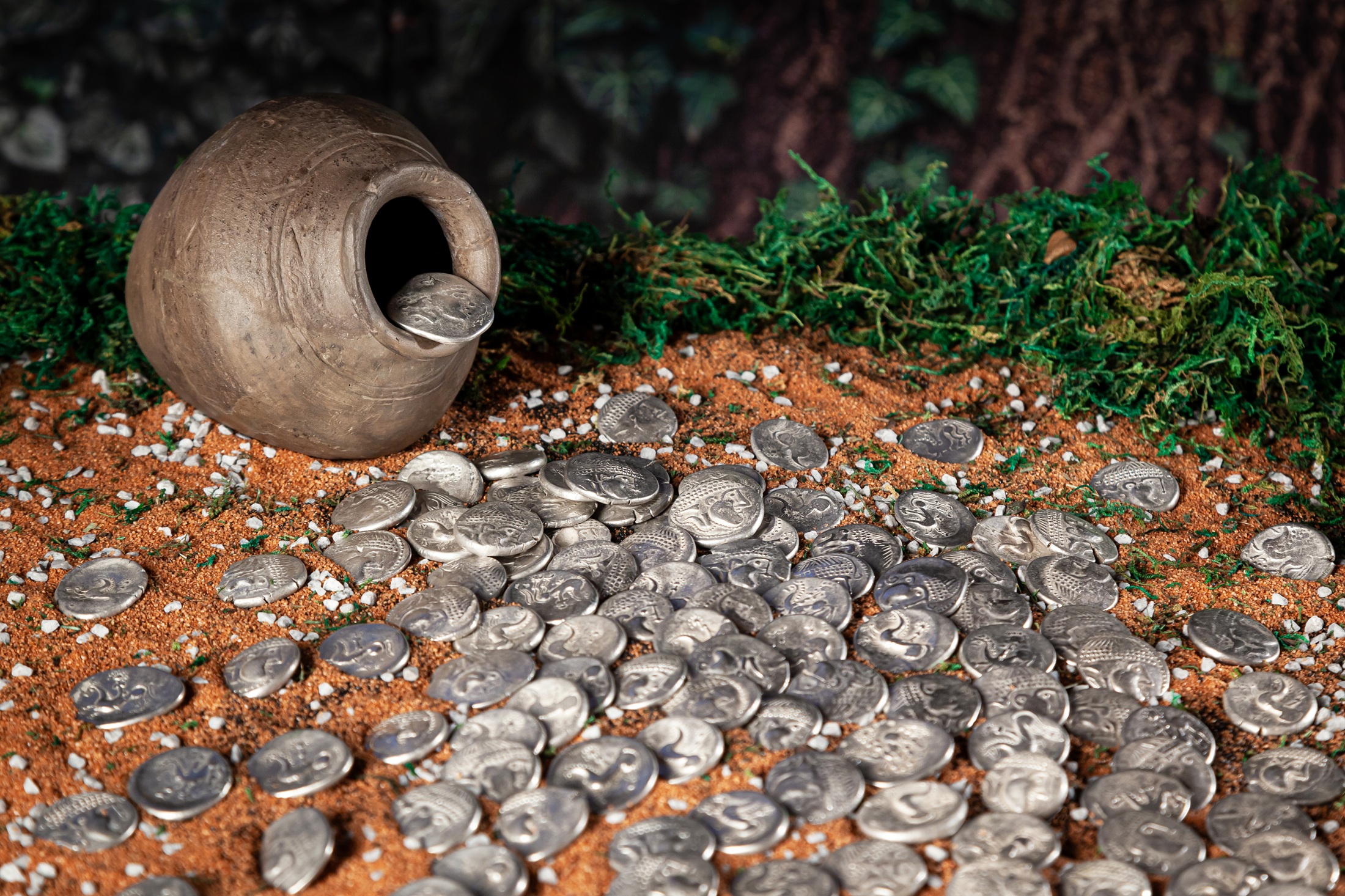
Celtic silver coin hoard found in Hungary

A hoard of more than 200 Celtic silver coins has been discovered during construction of an electrical substation in Szombathely, Hungary. The new substation is being built on a site where archaeological remains have been found in the past, triggering a professional excavation before construction began. Less than 40 cm (16 inches) under the surface, the team from the National Archaeological Institute of the Hungarian National Museum Public Collection Center uncovered a few silver coins that had been scattered by agricultural work. Metal detectors then located the core of the hoard.

They were cached in a pit, some loose, some inside a small earthenware container. The coins are all Velem-type tetradrachms dating from the late 2nd century B.C. to the beginning of the 1st century B.C. On the obverse of the coins is a Celticized head in profile facing right bearing a pearl diadem and necklace. On the reverse is a stylized horse and rider wearing a crested helmet. They were probably minted in the Velem-Szentvid area, less than 10 miles from the find site.

Worth four drachmae a piece (hence “tetradrachms”), the denomination was widely used as trade coin and for state expenses throughout the Greco-Roman world. Their high silver content and large value made them unsuitable as a daily currency for individuals to spend, but perfect for them to store their wealth. The number of tetradrachms found in hoards attest to this usage.

The coin hoard is not the only significant find made in the two years since excavations began. Archaeologists have found material remains and thousands of artifacts covering almost 7,000 years of history. The oldest object is a polished stone axe used to fell trees and work wood. Another stand-out piece is a peacock-eye glass bead from the Early Iron Age (7th-6th century B.C.). From the remains of a Roman building, archaeologists recovered a fragment of a brick with a dog pawprint. It’s a flat tile, perhaps from a pilae stack that raised the floor over a hypocaust heating system.

A selection of the finds from the excavation will be exhibited at the Savaria Museum in Szombathely.
Update: Northern Ireland bog body was a woman

The body that was discovered in a bog in Bellaghy, County Derry, Northern Ireland, in 2023 has been subjected to a coroner’s inquest. In a first of its kind investigation, Coroner Joe McCrisken examined a 2,000-year-old bog body at the Ulster Museum in Belfast. The archaeological inquest has revealed that the deceased, originally believed to have been a teenaged boy, was a young woman between 17 and 22 years old when she died. She has been officially named Ballymacombs More Woman.

In a first of its kind investigation, a coroner’s investigation of a 2,000-year-old bog body has been held at the Ulster Museum in Belfast. The archaeological inquest has revealed that the deceased, originally believed to have been a teenaged boy, was a young woman between 17 and 22 years old when she died. She has been officially named Ballymacombs More Woman.

The remains were discovered by a commercial peat extraction crew who reported it to authorities. The police Body Recovery Team were unable to determine whether it was a recent death under their purview, so the Archaeological Unit did a full excavation of the site. Working under a tent to prevent contamination, they recovered leg and arm bones, ribs, shoulder bones, fingers, toes, plus soft tissues including partial skin, fingers, toenails and a kidney.

The initial examination by a forensic anthropologist identified the deceased as a male between 13 and 17 years old. Two years of further investigation and analysis followed, enlisting the expertise of researchers from Ireland, England and Denmark and techniques including micro-CT scanning, digital mapping, 3D imaging and radiocarbon dating.

The expert evidence and results of the two-year study were presented at the coroner’s investigation. They found that the initial assessment was wrong about her sex. Cut marks on her cervical vertebrae show that she was intentionally decapitated in the bog. No skull was found, so her head was likely removed after she was killed. Estimates of her height before decapitation indicate she was about 5’6″ tall.

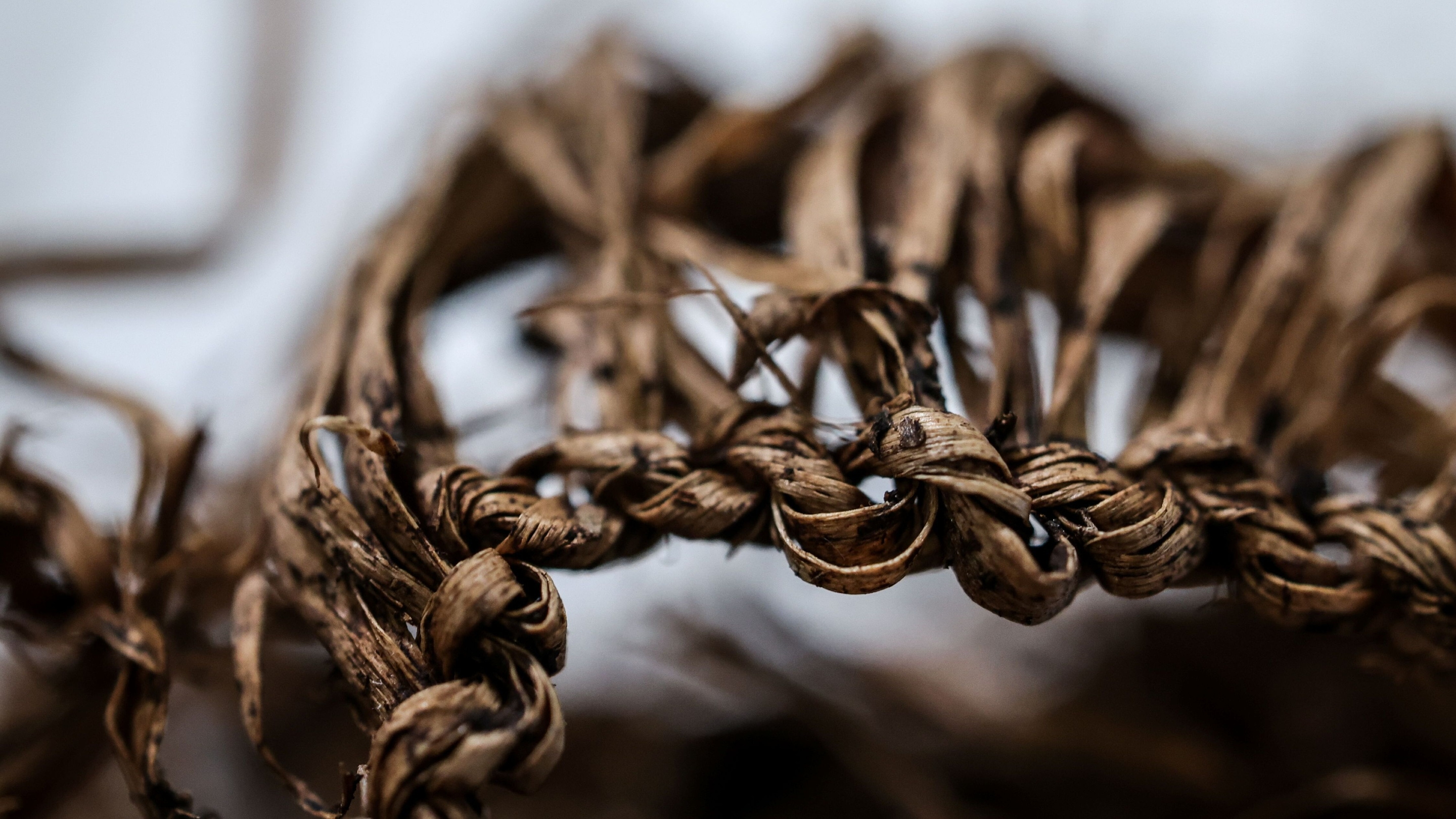
Isotope analysis found that her diet was seasonal. She ate what was available at any given time of the year. Peat samples taken at the find site revealed that 2,000 years ago there were woods around the bog. She was found with a woven plant fiber that suggests certain plants were farmed in the area

Archaeologists believe this was a ritual killing or sacrifice, examples of which have been found in Denmark, Germany and Ireland. Methods of dead include beheading, poisoning and garrotting. The victims have almost always been men, however, which makes this find exceptional. It is also the first bog body discovered in Northern Ireland.

The coroner’s investigation was attended by more than 60 people, many of them experts in fields related to the find, plus 20 members of the Bellaghy Historical Society. The members of the Bellagy Historical society have given her a more personal appellation: Áine. They gathered to witness the investigation not just out of scientific curiosity, but to pay their respects to an ancestral member of the community.

Copper scepter head found in Armenia

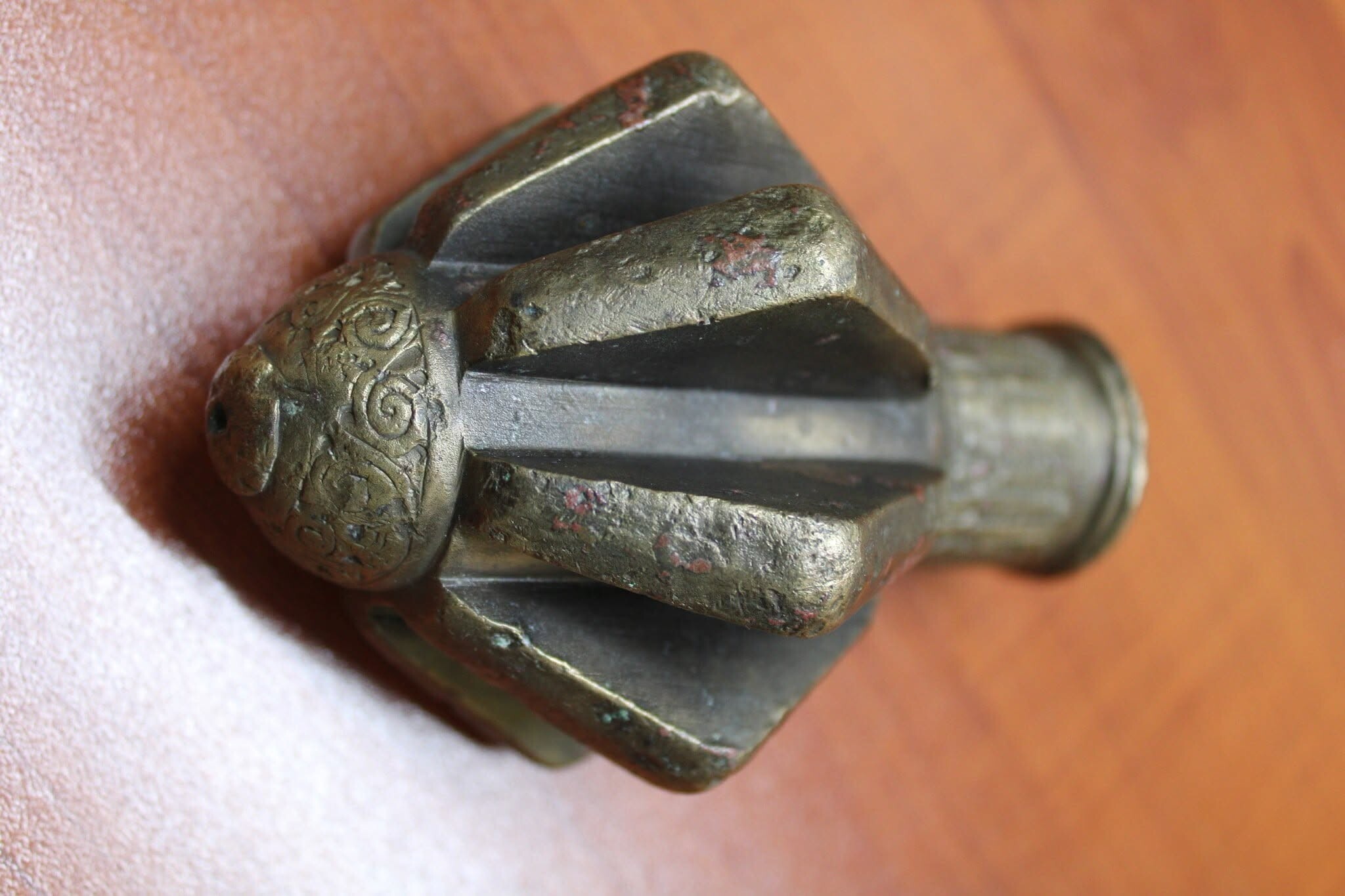
A rare medieval copper scepter head has been discovered in Kapan, southeast Armenia. Similar to a modified mace, the scepter is decorated with swirl patterns on the top and eight flattened blades. It was a symbol of royal power from a time when Armenia had vassal kingdoms under the central monarch. It dates to the 10th or 11th century.

The Kapan area was part of the territories of the princely Siunia dynasty. There was a small settlement at the site of what would become Kapan by the 5th century, and a fortress was built nearby in the 4th century. Kapan rose to major prominence in the 10th century when it became the capital of the self-style Kingdom of Kapan. It was a vassal of the Bagratid dynasty rulers of Greater Armenia, and survived a little more than 100 years, from 987 to 1170.

According to Stepanos Orbelian, a medieval Armenian historian, bishop, and a prominent member of the noble Orbelian dynasty, the capital of the Kingdom of Syunik was destroyed in 1126 under the command of Amir Harun as a result of Seljuk invasions, but the kingdom, thanks to the already impregnable fortress of Baghaberd, survived until 1170, being the last independent Armenian kingdom of Greater Armenia.

The first systematic archaeological investigations at the site of Old Kapan an environs began only in 2024. They found evidence of powerful fortifications, double-layered walls and a larger defensive tower near the entrance to the fortress.

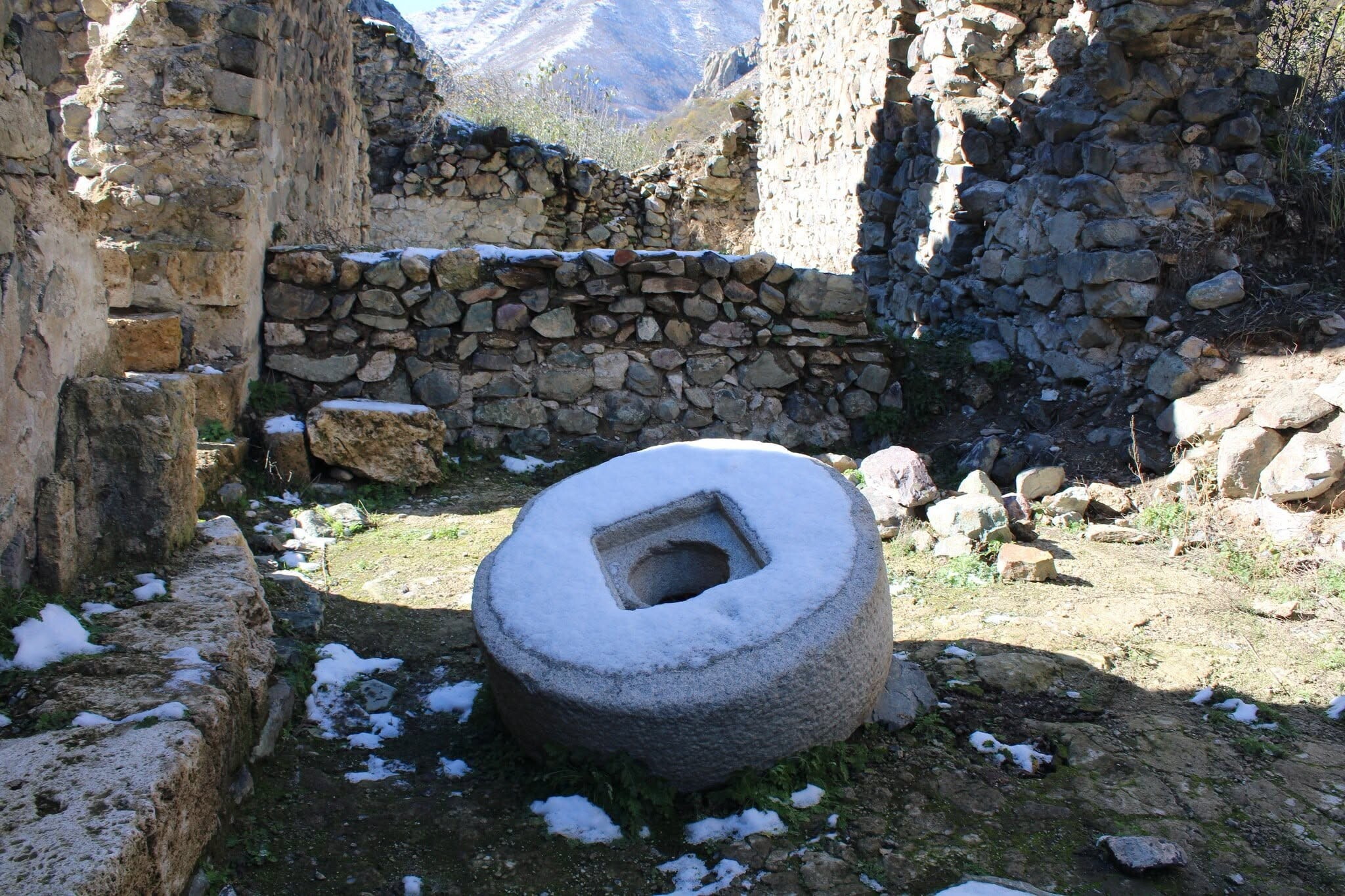
Last year’s excavation uncovered the remains of foundations and column bases from a three-aisled basilica dating to the 4th or 5th century. Near the church, archaeologists found a stone oil press four feet in diameter. This year the team uncovered a furnace of polished stone that likely heated the water of a public bath at the site.

The scepter has been transferred to the Kapan Geological Museum for conservation and display.

Huge leg came from monumental bronze emperor in Scotland

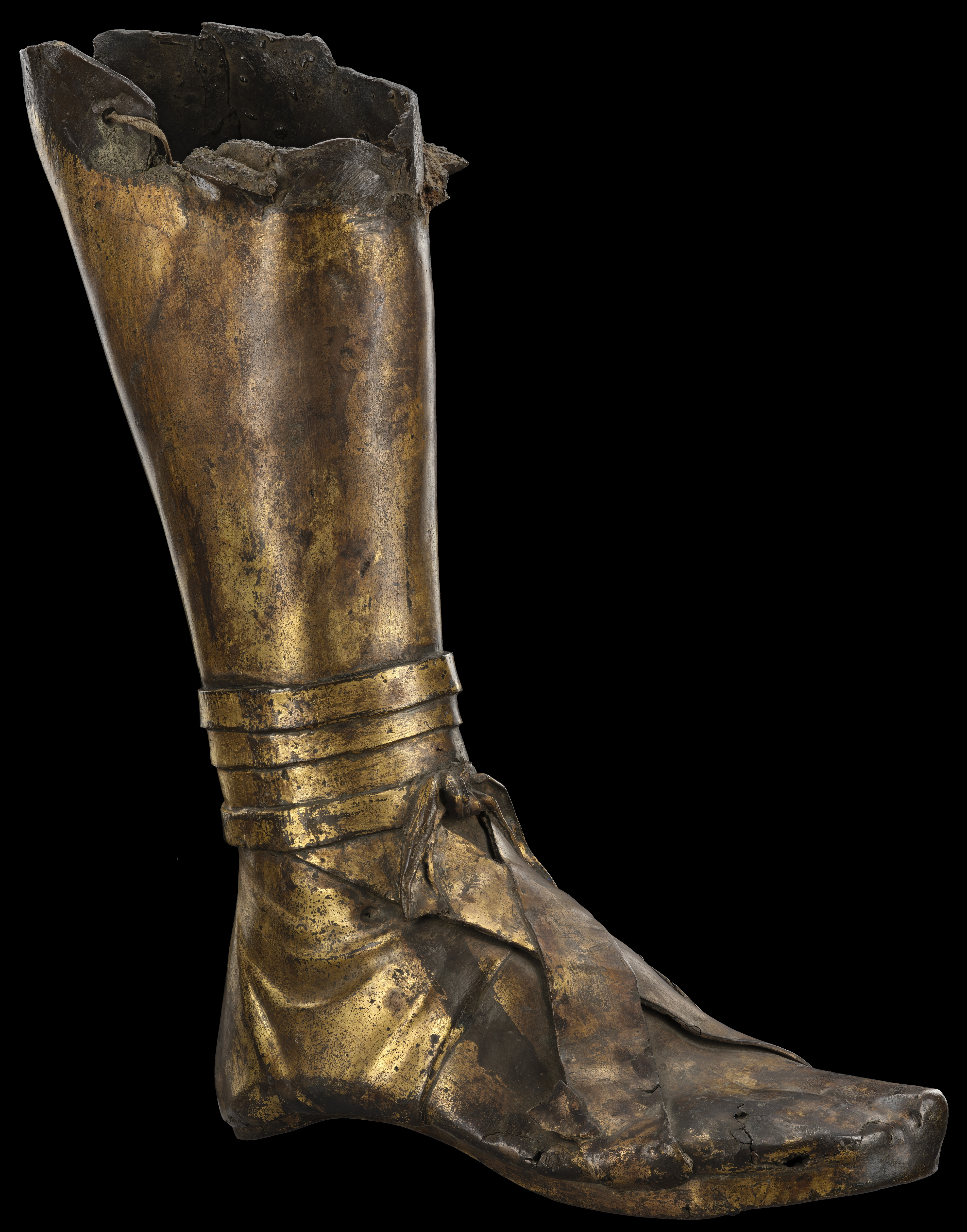
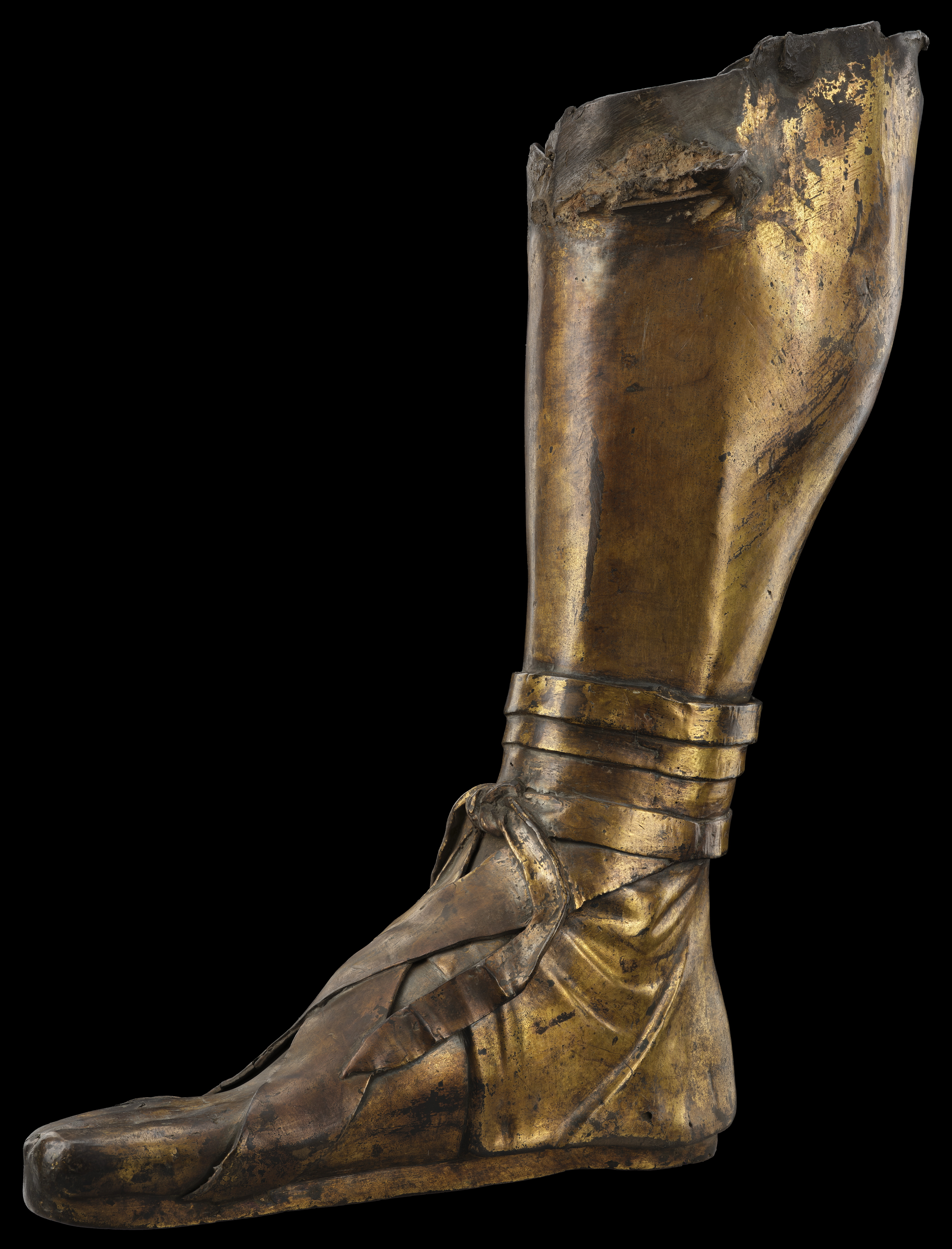
A larger-than-life-sized gilded bronze leg discovered in 1820 has been newly identified as a fragment of a monumental statue of Roman Emperor Antoninus Pius erected in the Scottish Borders. Since its discovery, the leg was believed to have come from England, likely the urban center of Eboracum, modern-day York.

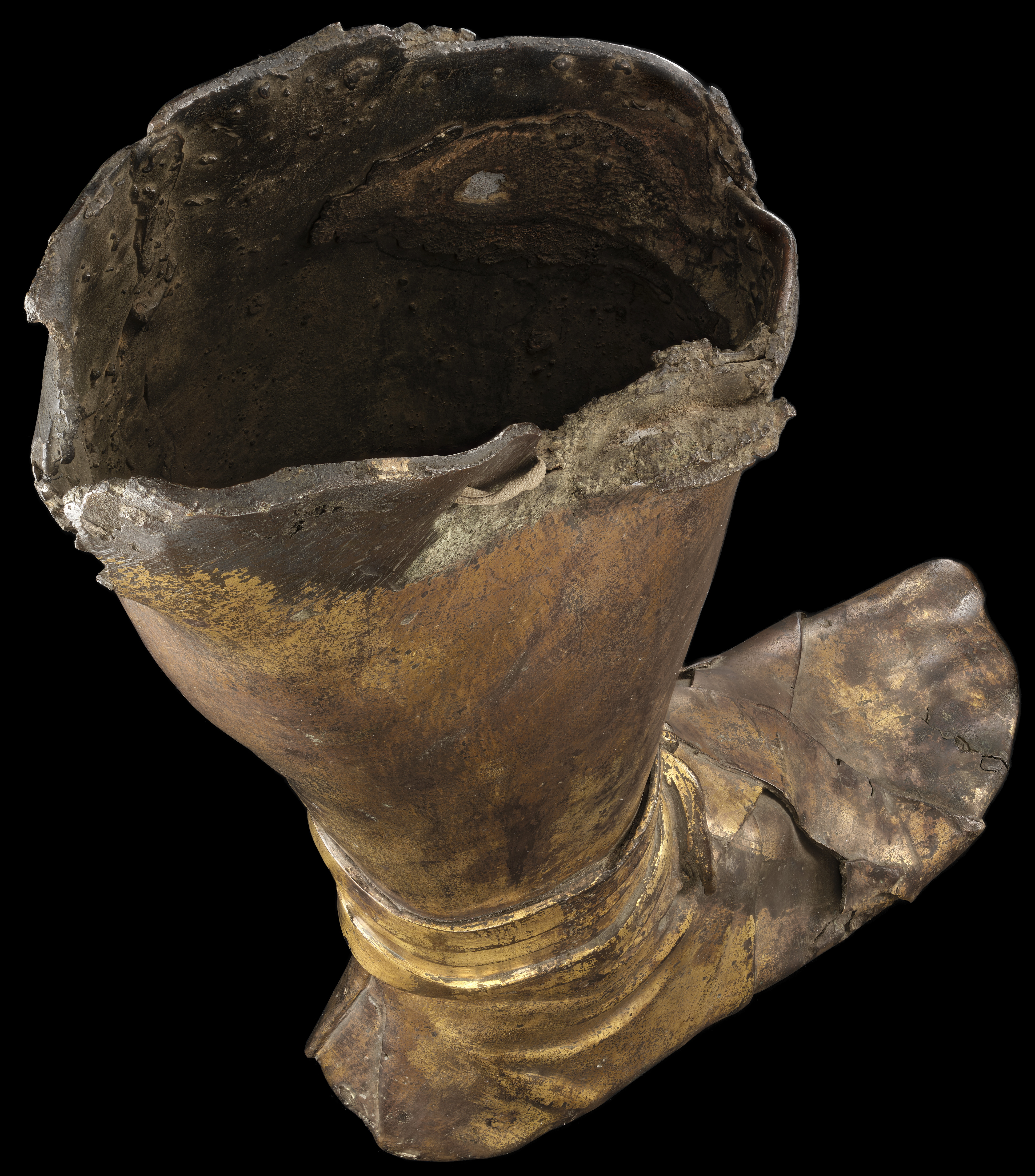
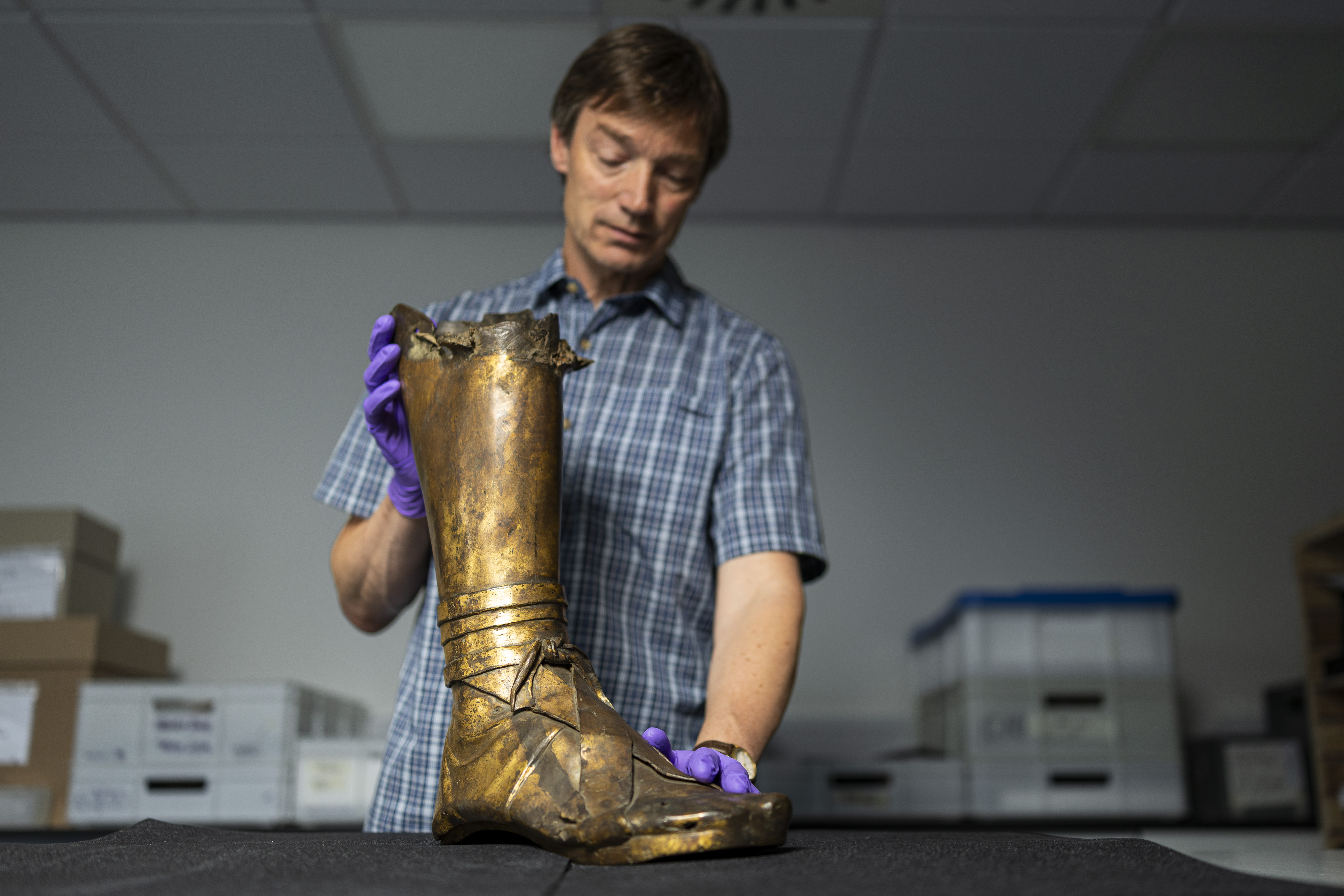
The leg was found in a bog in Milsington near Hawick. It was exceptional for its great size and condition, with much of its original gilding still intact. It is a lower leg below the knee wearing with straps crossed the top of the foot, wrapping around the ankle and tied in front knot. It dates to 140 A.D.

Scholars initially thought it came from northern England because its high quality and rich gilding suggested close proximity to expensive craftspeople and materials, but more recent studies of Roman statue fragments has found that in fact, frontier forts on the Scottish border did erect bronze statues of the emperor, even equestrian ones.

In addition, the cut line where the leg was removed was handled very gently. There are no cut marks on the top. It was taken down as cast. Had the statue been dismembered by angry locals after the Romans withdrew from southern Scotland in 160-180 A.D., it would have been hacked off, not carefully removed, and chopped up for scrap.

Once curators had established that the statue was likely to have been erected in Scotland, they looked to answer the question of who it depicted. Just one emperor paid particular heed to his Scottish victories – Antoninus Pius. His conquest of southern Scotland was the only foreign adventure that he commemorated with the title Imperator, a battle-honour meaning ‘commander’ which marked an emperor’s victory.

Dr Fraser Hunter, Principal Curator of Prehistoric and Roman Archaeology at National Museums Scotland said:

“This really turns on its head our understanding of Rome’s second attempt at conquering Scotland. This was a big deal for the Emperor, something which was worth celebrating. It offers us a tantalising glimpse into the kind of grand monuments which once stood in southern Scotland and shows the importance Pius placed on his victories in Scotland. But it begs the question … where is the rest of the statue?”

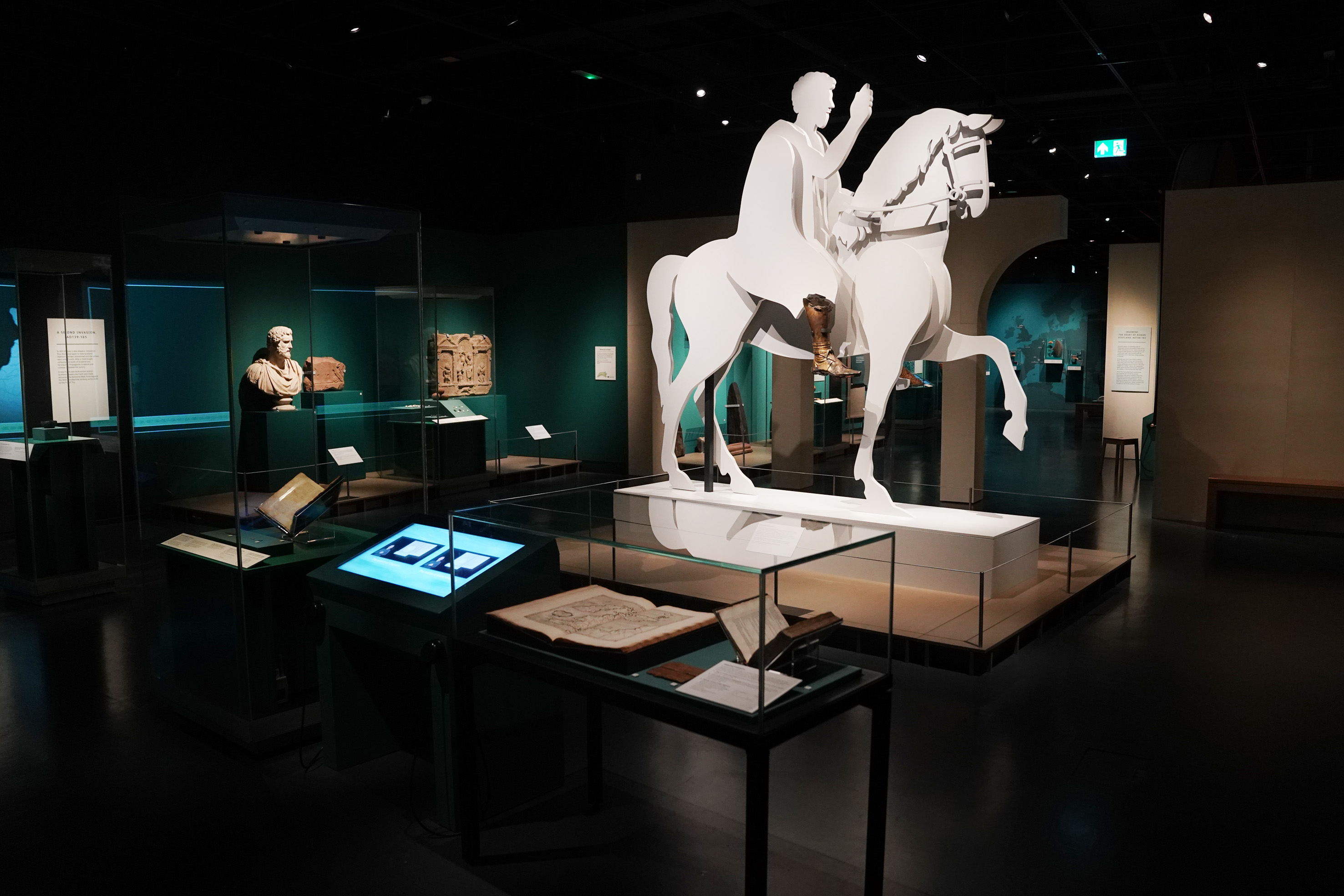
Mounted to a model of an equestrian statue like the iconic Marcus Aurelius in the Capitoline Museums in Rome, the leg is now on display in Roman Scotland: Life on the Edge of Empire, alongside a wealth of other priceless Roman-era artifacts, including the incredible Mithraic altar with the cutouts of the sun god Sol so it glowed when lit from behind found at Inveresk. The exhibition opened Saturday and runs through April 18th, 2027.

Iron Age frog mass grave explained

Scientists at Bournemouth University and Museum of London Archaeology have discovered the reason 8,000 frog and toad bones were found buried in a 45-foot-long trench at an Iron Age settlement near Cambridge in the UK.

The bones were unearthed during highway improvement works between 2016 and 2018. The trench was located near a Late Iron Age (400 B.C. – 43 A.D.) roundhouse, so the frogs were thought to have been buried between that range. It was a perplexing find. Frog bones had been found before in archaeological contexts, but only as an individuals. Mass burials of animal remains had been found before in archaeological contexts, usually from ceremonial feasting, but they were the usual food animals – livestock like cattle and sheep or chickens – not hundreds of tiny amphibians.

Archaeologists eliminated the possibility that they had been cooked in a feast because there were no cut marks or evidence of heating. Grain found nearby indicates the settlement grew crops that would attract amphibians, but it would take a Moses-level pestilence to explain the numbers. Another possibility was migrating frogs becoming trapped in the ditch on their way to breeding waters, or freezing to death in a sudden temperature drop while seeking shelter in the mud.

Well, it turns out all of those ideas were wrong. The frogs were eaten, but not by humans, and hundreds of years after the roundhouse was built.

After comparing the damage to the frog bones to previous studies, Dr Clarkson found they had been eaten by birds of prey, with short-eared owls and hen harriers being the most likely suspects.

But the story didn’t end there. Onsite archaeological evidence shows the ditch filled within a single year and therefore this still left the question of how so many bones appeared in such a short period of time. So, the Bournemouth team investigated further.

By measuring the size of the frog humeri (arm bones) – a pioneering new method of analysis – they discovered most of the frogs died young, having been eaten in the winter of their first year of life. Radiocarbon dating by the University of Vienna also showed the remains dated back 1700 years to Roman period.

The Fen waters were retreating in this valley in the Roman period, creating ideal conditions for the frogs to breed in – leaving an abundance for the birds to eat.

Humans were the owls’ accomplices in the mass slaughter. The area had previously been wooded, but in the Late Iron Age, people gradually felled the trees to make more land available for grazing their livestock. Short-eared owls hunt on grasslands, so the frogs were much more exposed with fewer trees to shelter them.

“We don’t often get an owl’s eye view of what it was like in the past from archaeological sites,” said Dr Paul Clarkson of Bournemouth University who led the study.

“The mystery of these frogs has been solved – a feast of frogs that were eaten and their bones left behind by a group of owls. These bones not only tell us about life for people living near the Roman Fens, but they also give insights into the natural world – what wild animals were getting up to in the past, and what life was like for them,” he added.