Ancient Celtic coin hoard found in Germany

A group of 11 Celtic silver coins has been discovered under a playing field in Singen, central Germany. The coins are about 2,000 years old and exceptionally rare. The barely double-digits hoard is the largest one of from the period ever discovered in Thuringia.

The coins emerged in an archaeological survey of the former sports field in advance of construction of a new fire station. The first individual finds were unearthed in July and August of last year when construction was being overseen by archaeologists. A targeted excavation at the site last month uncovered the rest. The excavation revealed that the 11 coins were a single deposit that had been scattered by later agricultural work.

The original container has vanished. Researchers found no pottery fragments, leading them to believe the coins were probably kept in something made from organic material, perhaps a small pouch or another container that decayed long ago.

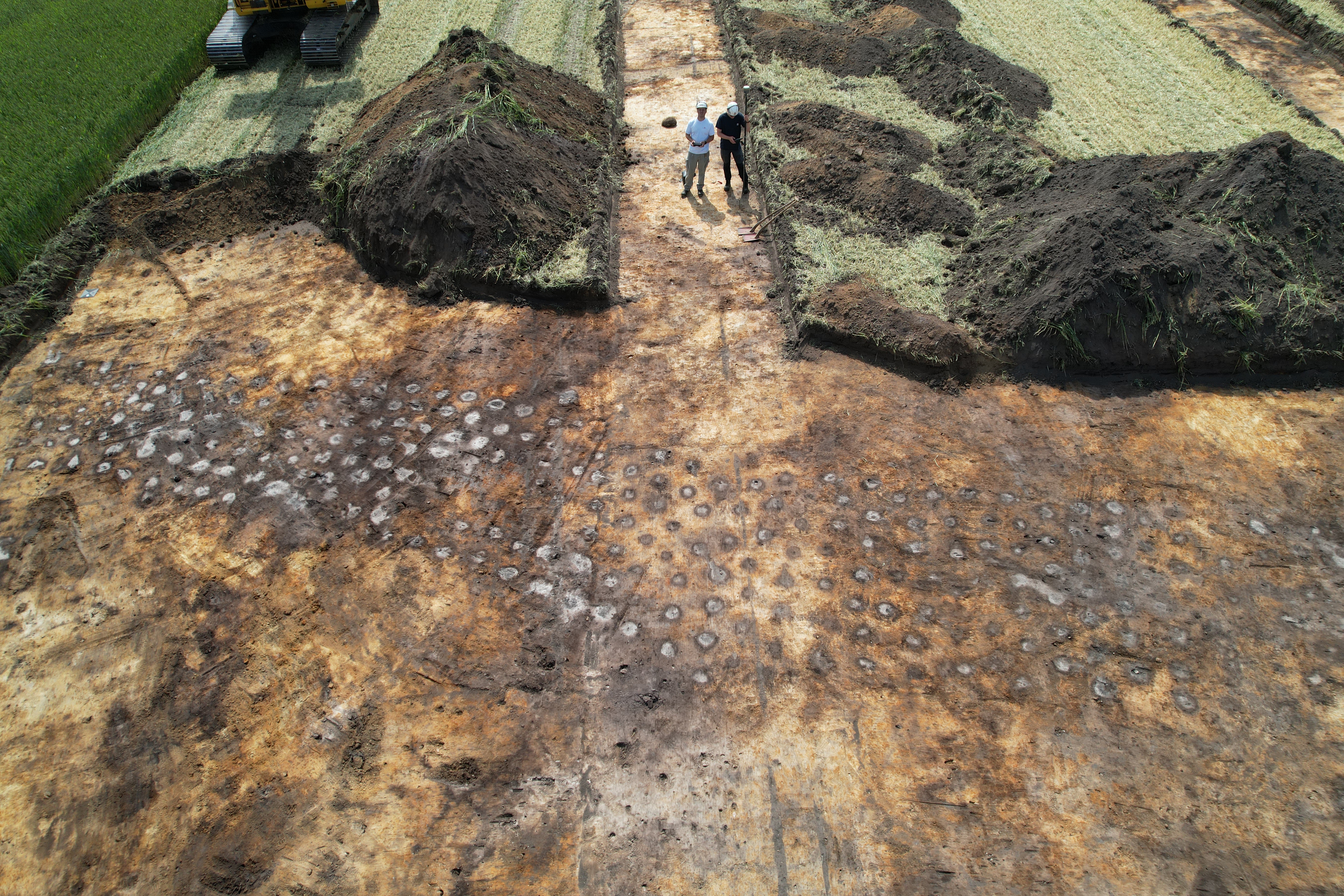
The coins were no longer lying where their owner had placed them. Centuries of ploughing had dragged them across an area measuring roughly 5.8 by 1.5 meters. Careful documentation nevertheless allowed archaeologists to reconstruct their relationship and distinguish the hoard from later objects found nearby.

The 11 coins are all silver quinarii of the Prague type. Only around 80 of them are known to have been found in Thuringia, so this single deposit is not only the largest, but contains more than 10% of the total Prague-type quinarii in the state.

Numismatists believe the quinarii may have been locally produced in the Gotha region just northwest of Singen. The find site is located between Gotha and a concentration of Celtic settlements, including Steinsburg which was one of the most important Celtic settlements in the region and was known for its craft production.

That makes the Singen hoard more than an isolated cache of silver. Its location adds another point to the archaeological map, helping researchers trace possible connections between production centers, settlements and the routes along which coins and other goods moved through Iron Age Thuringia.

The Thuringian State Office for Heritage Management and Archaeology says the discovery has significantly expanded what is known about these regional connections.

Ancient bronze bracelets found in Uzbekistan

An ancient grave containing bronze bracelets, jewelry and beads has been discovered in the Samarkand Region of Uzbekistan.

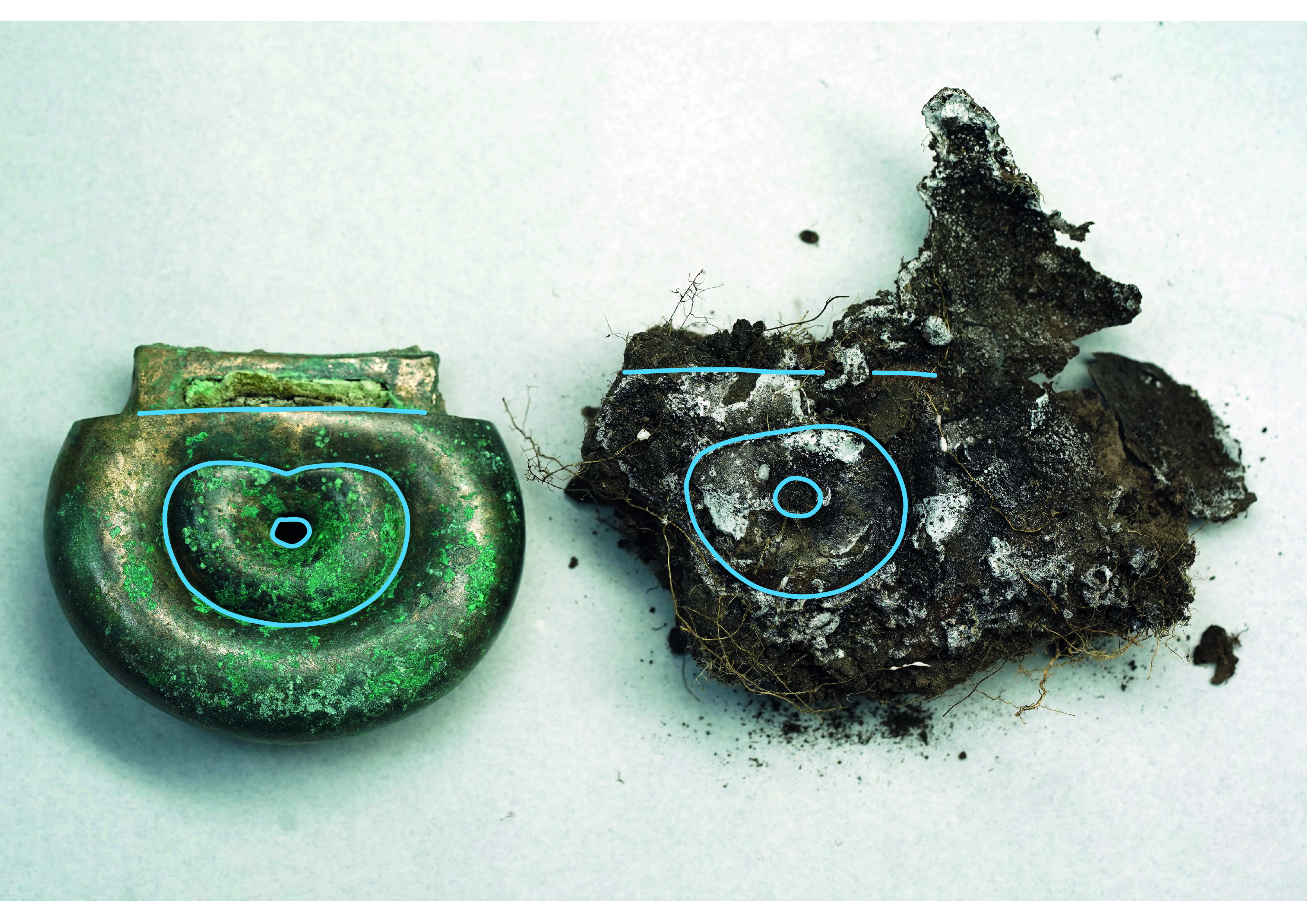
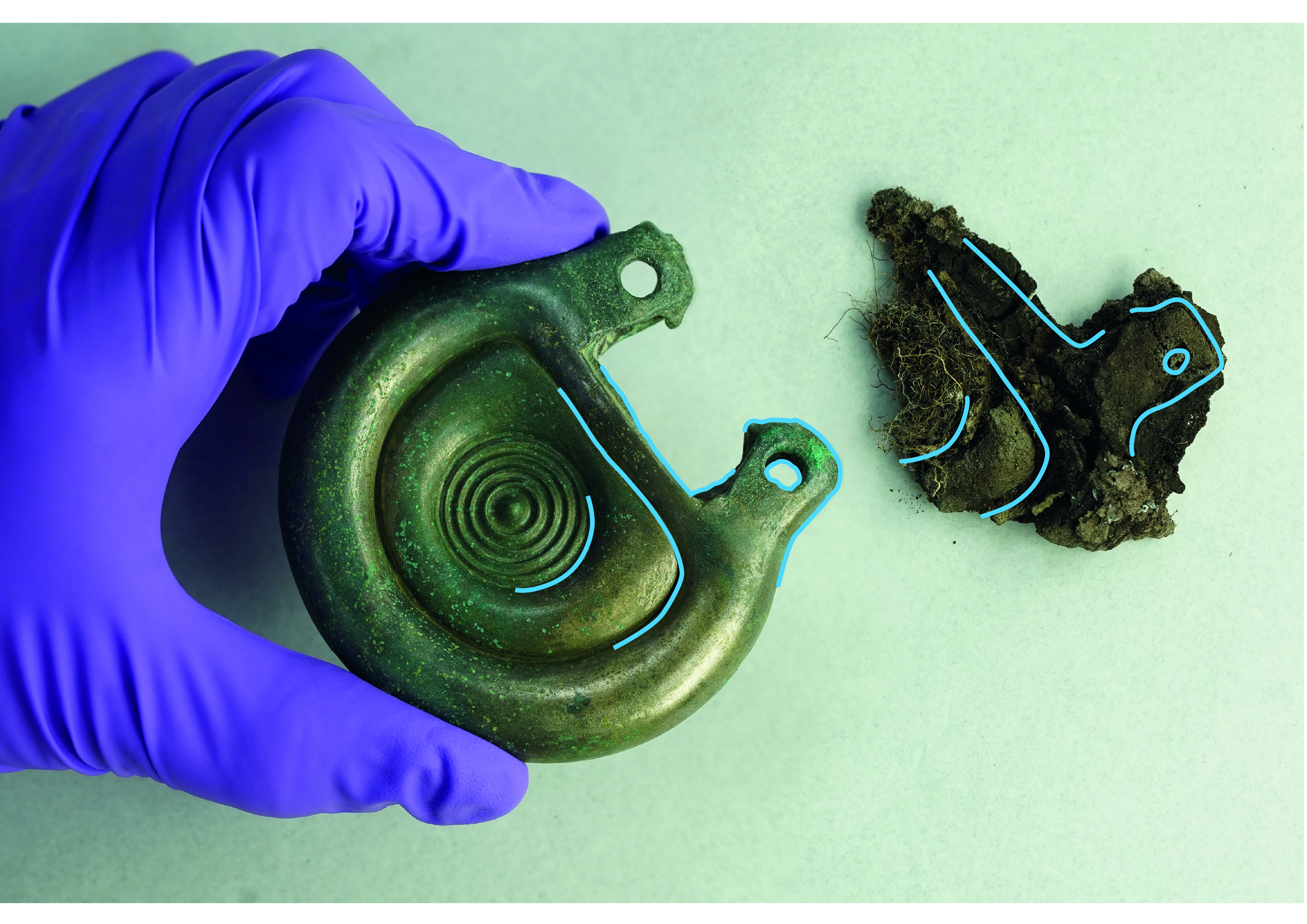
Human skeletal remains and bronze objects were found by a local resident of the village of Darvozagaz when he was digging in his yard. He reported the find to Y. Gulyamov Samarkand Institute of Archaeology and they dispatched archaeologists to investigate. They recovered all of the human bones and bronze artifacts for examination and conservation.

“According to preliminary observations, some of the found bronze bracelets are distinguished by their conical ends and spiral decorations,” says Mominkhon Saidov, director of the Samarkand Institute of Archaeology. “Their shape and decorative features are similar to jewelry typical of the culture of steppe pastoral tribes living in the last stage of the Bronze Age. Archaeological materials related to the culture of the steppe pastoral population of the Bronze Age have also been discovered in a number of settlements and cemeteries in the Zarafshan Valley.”

Objects of this kind are associated with the Andronovo-Tozabogyob culture and typically date to between the 13th and 10th centuries B.C. and circle. None of the finds have been conclusively dated yet, however. Further excavations are planned to clarify the period and cultural context, as well as osteological investigations and metallurgical analysis of the recovered remains.

If the preliminary conclusions confirm that this was a burial from the Late Bronze Age, the discovery will add important new information to the archaeological record of the ancient pastoral communities of Samarkand’s Zarafshan Valley.

Update on Roman gold coin hoard found in Luxembourg

The first detailed study of the unique hoard of 141 gold coins from Late Antiquity discovered in Holzthum, Luxembourg, in 2019 has revealed the likely burial date — 395 A.D. — and an unusually large concentration of coins minted in Anatolia. The study has been published in the journal Schweizer Münzblätter and can be read here.

The first 39 coins were found by metal detectorists who reported the finds without attempting to excavate them. Luxembourg’s National Institute for Archaeological Research (INRA) excavated the find site for four years. The process was so slow because the field was full of unexploded ordnance and munitions from World War II. The archaeologists worked side-by-side with explosives experts from the Luxembourg Army Mine Action Service (SEDAL).

When the excavation was complete and the coins safely recovered, it was the end of 2024. Since then, the coins have been conserved, documented and analyzed. Numismatists compared the hoard to others from the same period found in the Benelux countries and western Germany.

Seventeen of the Holzthum coins were struck between AD 364 and 367 at Nicomedia, the major Roman mint on the Sea of Marmara in northwestern Anatolia. They account for 12.2 percent of the 139 regular coins included in the study’s mint-distribution table; the remaining two pieces are fragmentary plated coins.

That concentration is unusual. According to David Wigg-Wolf, David Weis, and Lynn Stoffel, who published the analysis in Schweizer Münzblätter, the Coin Hoards of the Roman Empire database contains no comparable regional hoard with such a strong representation from Nicomedia. […]

Emperor Valentinian I was proclaimed Augustus at Ancyra, modern Ankara, in AD 364. The researchers suggest that eastern solidi could have travelled west with Valentinian and his army as they moved first toward Italy and later into Gaul. The Holzthum coins therefore offer a possible material trace of money moving thousands of kilometres with the machinery of the Roman state.

Coins struck in Constantinople between 383 and 388 A.D., and at Sirmium between 394-395 A.D. may have also have moved west with Roman troops after Theodosius I’s defeat of Eugenius at the Battle of the Frigidus on the border between what are now Italy and Slovenia in 394 A.D. There are three Eugenius coins in the hoard, which are very rare because he only ruled the West for two years.

The two plated coins were also investigated. Researchers identified them as the RESTITVTOR REIPVBLICAE type. One was an ancient imitation, the other has a dark surface that suggests high quantities of solver or tin. Based on the portrait style, one was probably an ancient imitation. Another coin has an unusually dark surface and may contain substantial quantities of silver or tin rather than fine gold, although researchers have not yet carried out the metal analysis required to confirm its composition.

6th c. B.C. Picentene grave unearthed

A Picentene tomb dating to the 6th century B.C. has been discovered in Sant’Elpidio a Mare in the central Italian region of Le Marche.

Artifacts believe to be archaeological materials were reported to the local Superintendency of Archaeology who then investigated the site. The experts found that they were not individual objects, but rather an assemblage of funerary furnishings including ceramic vessels that had been placed in a tomb. The style of the ceramics identified the grave as Picentene from the 6th century B.C. T he objects were documented on site, then recovered for study and conservation in the laboratory.

The Piceni were a pre-Roman Italic people who inhabited what is now eastern central Italy between the Apennines and the Adriatic coast from the 9th to the 3rd century B.C. The Picenum area was not governed as one state, nor did it have a single large population center or capital, but it was a culture with highly developed metallurgy, ceramics and elaborately ornamented jewelry. The Roman Republic conquered Picenum and annexed its territories in the late 3rd century B.C.

The discovery is located in an area that has long been the focus of attention by the Superintendency and other agencies responsible for protecting the region’s cultural heritage. Over the years, in fact, this area has been the site of several chance archaeological finds, a circumstance that has helped keep the attention of the agencies responsible for research and heritage conservation focused on the site. The new find now offers an opportunity to further deepen our understanding of the Picene presence in the Sant’Elpidio a Mare area through the study of the grave goods and the characteristics of the burial.

Town officials are also working with the Superintendency to arrange for the public display of the newly-discovered artifacts. When the exhibition will take place depends on when the study and conservation of the objects is complete.

Rare Byzantine gold signet ring with woman’s name found in Bulgaria

Byzantine gold seal ring inscription "Sevasta Maria Skulena." Photo courtesy Prof. Nikolay Ovcharov. A rare gold signet ring from the 14th century inscribed with the name of a woman has been discovered near Zlatograd in south-central Bulgaria just three miles from the Greek border. Incised deep in the flat oval face of the ring is the title and name “Sevasta Maria Skulena.” The lettering marks it as having been made in a provincial workshop likely around 1330-1350.

It’s so small that at first glance experts thought it could have belonged to a child, but obviously when they saw it was a signet ring that possibility was eliminated. Children did not authenticate documents with seals of their names and titles. Instead, it must have been worn on Maria Skulena’s pinkie finger, which is a convenient finger to use for stamping.

The title “sevast” which means “honored” or “revered” and was first created by Byzantine Emperor Alexius Komnenos in the 11th century. He meant it only for people of extremely high rank at the Constantinople court. It depreciated over time, and by the 14th century could be bought by local big fish in small pounds and people with deep pockets.

Documents in the archives of the Great Lavra Monastery on Mount Athos record a member of the Skules family who was a landowner with extensive properties in Aegean Macedonia (50-100 miles from Zlatograd) as well as the Rhodope Mountains in 1338. Michael Skules was “general judge of the Romans” in 1371 and bore the title “sevast,” which means “honored” or “revered.” Maria Skulena was likely his wife and must have been a person of high social position to have her own document seal.

The ring was acquired by private collector engineer Alexander Mitushev, so unfortunately nothing of is known of its original archaeological context. The only information he was given was that it was found recently near Zlatograd. Mitushev registered the find legally by turning it over to cultural heritage authorities, and then put it on display for the first time last week at the Archaeological and Ethnographic Museum in Zlatograd, a museum he founded and continues to expand by sponsoring excavations and by his purchases and donations.